
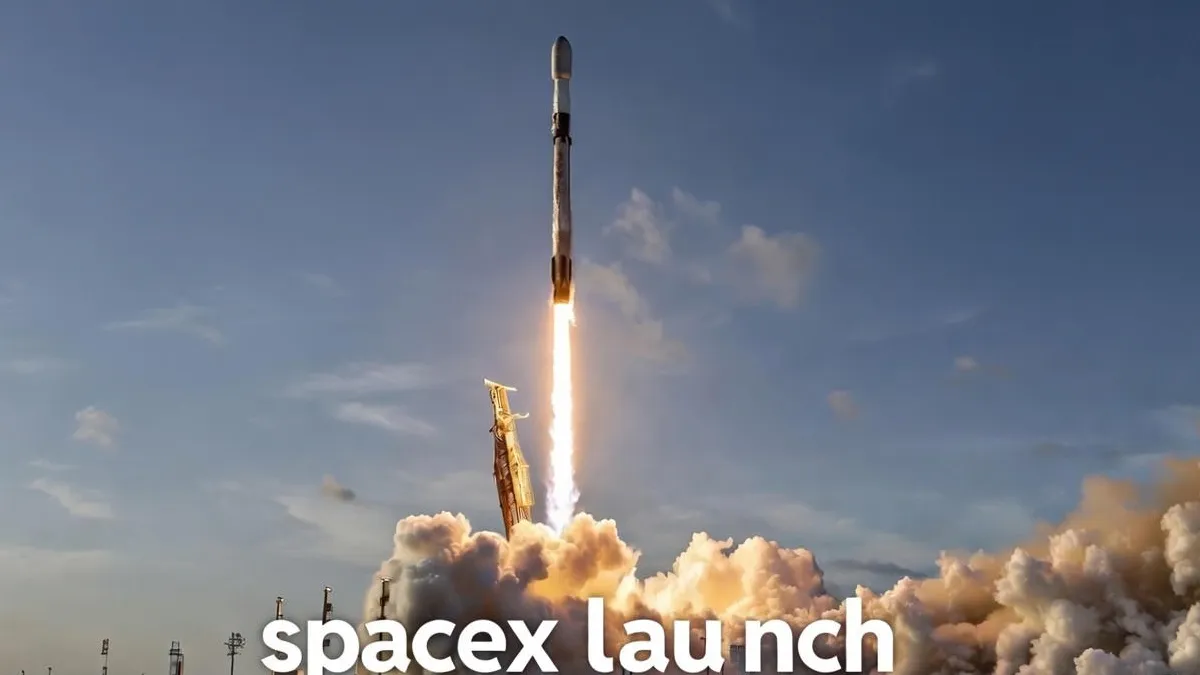
Rocket launches capture global attention because they represent progress, precision, and technological ambition. Each successful liftoff brings satellites into orbit, supports scientific research, and strengthens global communication networks. Today’s SpaceX launch continues this trend, drawing attention from space enthusiasts and industry watchers alike.
SpaceX Launch Today: What Happened
SpaceX successfully carried out a rocket launch today from Vandenberg Space Force Base, one of the most important launch sites on the US West Coast. Vandenberg is primarily used for missions that require polar or sun-synchronous orbits, making it ideal for Earth-observation and communications satellites.
The launch was executed with precision, following a carefully planned countdown and weather assessment. Within minutes of liftoff, the rocket cleared the atmosphere and began its journey toward orbit.
Which Rocket Was Used
Most launches from Vandenberg involve SpaceX’s workhorse rocket, the Falcon 9. Known for its reusability, Falcon 9 has become a symbol of cost-effective spaceflight. The rocket’s first stage is designed to return to Earth and land safely, allowing it to be reused for future missions.
Reusable rockets have significantly reduced launch costs and increased launch frequency, enabling SpaceX to conduct missions more regularly than traditional space programs.
Why Vandenberg Launches Are Important
Vandenberg launches are unique because of their orbital paths. Rockets launched from this base often travel southward along the California coast, creating spectacular visual trails visible across parts of the western United States.
These missions typically support:
- Earth-monitoring satellites
- Climate and environmental observation
- Defense and research payloads
- Global communication networks
Because of these roles, Vandenberg plays a critical part in both civilian and government space operations.
What the Mission Means
Today’s SpaceX rocket launch contributes to expanding satellite coverage and improving space-based infrastructure. Whether the mission supports communications, navigation, or scientific observation, each launch strengthens the backbone of modern technology that people rely on daily.
For SpaceX, frequent launches also demonstrate reliability, which is essential for commercial partners and government agencies that depend on precise orbital deployment.
Public Interest in Rocket Launches Today
Searches for “rocket launch today” spike whenever SpaceX schedules a mission, reflecting strong public interest. Live streams, countdowns, and post-launch updates allow people worldwide to follow missions in real time.
This accessibility has helped SpaceX bring space exploration closer to the public, transforming launches into shared global events rather than closed technical operations.
What Happens After Launch
After reaching orbit, the payload separates from the rocket and begins its mission. If the mission includes booster recovery, the first stage either lands on a drone ship at sea or returns to a landing zone.
Successful recoveries further SpaceX’s goal of rapid rocket reuse, a key factor in making space more accessible and sustainable.
Looking Ahead
SpaceX maintains an ambitious launch schedule, with missions planned from multiple locations throughout the year. As launch frequency increases, space-based services such as internet connectivity, navigation accuracy, and Earth monitoring are expected to improve.
Future launches from Vandenberg will continue to play a vital role in missions that require specialized orbits.
Conclusion
Today’s SpaceX launch from Vandenberg highlights the company’s ongoing commitment to reliable, reusable, and efficient spaceflight. Each successful mission brings humanity closer to a future where access to space is more routine, affordable, and impactful. As interest in rocket launches continues to grow, SpaceX remains at the center of modern space exploration.
Disclaimer
This article is for informational purposes only. Launch schedules and mission details may change due to technical or weather conditions